About
The History of Dovecliff Hall
A Grade II listed Georgian manor built in 1790 for the Thornewill family of ironmasters — two centuries of stories above the River Dove, near Burton on Trent.
The House
A Georgian Manor House Since 1790
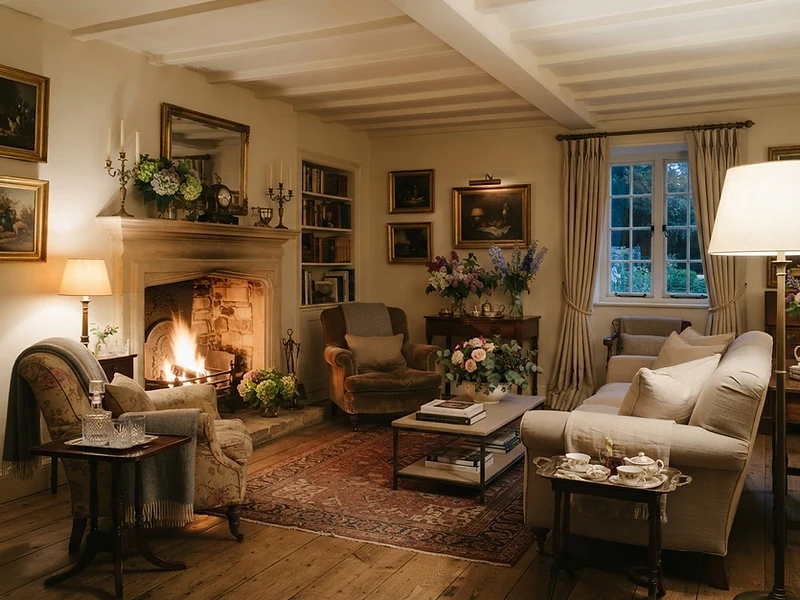
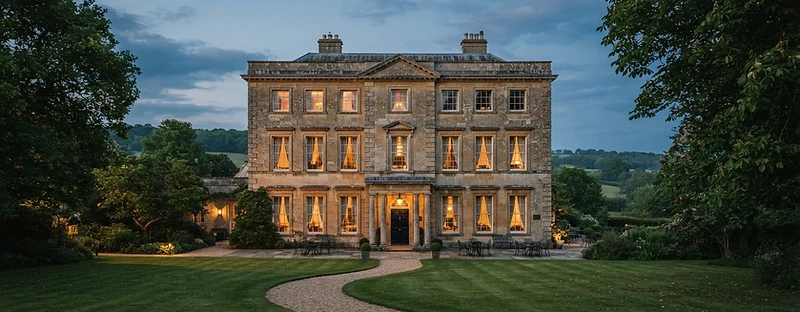
Built in 1790 for Thomas Thornewill, a Stretton forge-owner, Dovecliff Hall has watched over the River Dove for more than two centuries — passing from ironmasters to brewers to soldiers, and finally to a hotel.
The Hall's story is the story of Burton-on-Trent itself: of iron and brewing, of ambitious local families and royal friendships, and of a house that has always found its way back to welcoming people.
- 1790Thomas Thornewill, a Stretton forge-owner, builds the Georgian manor on the banks of the River Dove.
- 1843Thomas dies; the house and the family ironworks pass to his son Edward Thornewill.
- 1869Edward's daughter Harriet Georgina marries Michael Arthur Bass, becoming Lord and Lady Burton.
- 1881The estate is sold to William Joseph Smith of Derby, who also buys the Stretton ironworks.
- 1897Hugh Spencer Charrington, a Burton brewer, buys the Hall as the Bass and Charrington breweries merge.
- 1928The house opens as a hotel for the first time.
- 1936Colonel Sydney Raymond Sharp buys the Hall back as a private house — his portrait hangs in reception today.
- 1987Reopened and renamed as the Dovecliff Hall Hotel.
- TodayFifteen bedrooms, tailor-made weddings and The Charrington Restaurant — over two centuries of stories.

The Founders · 1790–1880
The Thornewill Family
Thomas Thornewill (1760–1843) built Dovecliff Hall in about 1790, shortly after his marriage to Mary Harvey. His father had owned a spade factory in Burton and converted a ruined corn mill near Stretton into a forge; Thomas inherited the business in 1786 and expanded it into Thornewill & Co., iron masters. In 1830 he commissioned an engraving of the house that survives to this day.
- — Built c.1790 on a 40-acre site beside the River Dove
- — Thomas Thornewill: ironmaster, owner of the Stretton forge
- — Inherited by his son Edward Thornewill (1801–1866) in 1843
- — Edward's widow Mary lived on at Dovecliff until her death in 1880

The Brewing Dynasties · 1869–1921
The Bass & Charrington Families
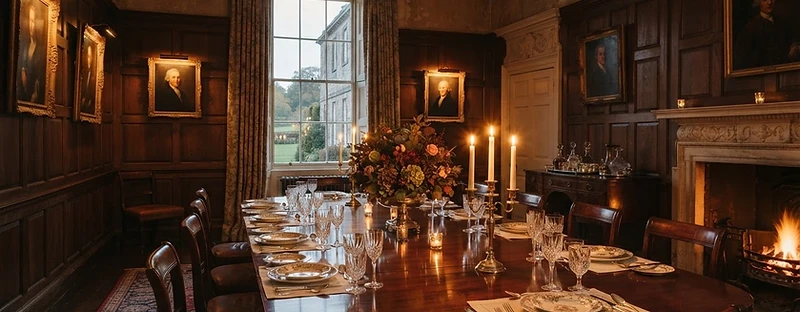
In 1869 Edward Thornewill's daughter Harriet Georgina married Michael Arthur Bass, becoming Lord and Lady Burton. Lord Bass was a generous benefactor to Burton — funding the Ferry Bridge among much else — and a friend of King Edward VII, whose 1902 visit to the Bass brewery at Rangemore began the brewing of the famous King's Ale. In 1881 the estate was sold to William Joseph Smith of Derby, and in 1897 to Hugh Spencer Charrington, a Burton brewer. When Caroline, daughter of Lord Bass, married into the Charrington family as the two great breweries merged, the house passed into the Bass family.
- — Harriet Georgina Thornewill married Michael Arthur Bass, 1st Baron Burton
- — Lord Bass: benefactor of Burton, friend of King Edward VII
- — Sold to William Joseph Smith in 1881, then Hugh Spencer Charrington in 1897
- — The Bass and Charrington breweries merged, uniting the families

The Soldier & The Hotel · 1928–Today
Colonel Sharpe & The Modern Era
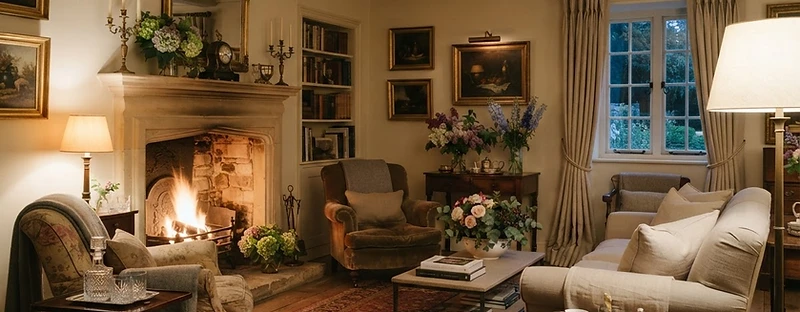
In 1928 the house opened as a hotel for the first time, but in 1936 it was bought back as a private home by Colonel Sydney Raymond Sharp. The Colonel was the son of John Thomas Sharp, a Burton timber merchant whose firm, Sharp Brothers and Knight, was well known in the town. Sydney established his own timber business, A. Sharp & Co., before becoming a director of his father's firm. His portrait still hangs in the hotel's reception today. After the war the property passed to Captain Anthony Walsham Neville Lake, and in 1987 it was reopened and renamed as the Dovecliff Hall Hotel.
- — First opened as a hotel in 1928
- — Bought as a private house by Colonel Sydney Raymond Sharp in 1936
- — Colonel Sharpe's portrait hangs in the hotel reception today
- — Reopened and renamed Dovecliff Hall Hotel in 1987


The Grounds
Gardens, Lawns and the River Beyond
The gardens are as much a part of Dovecliff as the house — mature trees, lawns for confetti and summer drinks, and paths that lead down toward the Dove.


The Cedar
The 400-Year-Old Cedar Tree
Beneath the boughs of our 400-year-old cedar tree, The Charrington Restaurant serves modern British dining — a living link between the Hall's past and its present.
Visit the Hall
Come and See for Yourself
Two centuries of history are woven through every room. Come for a meal, a stay or a wedding show-round and feel the house for yourself.